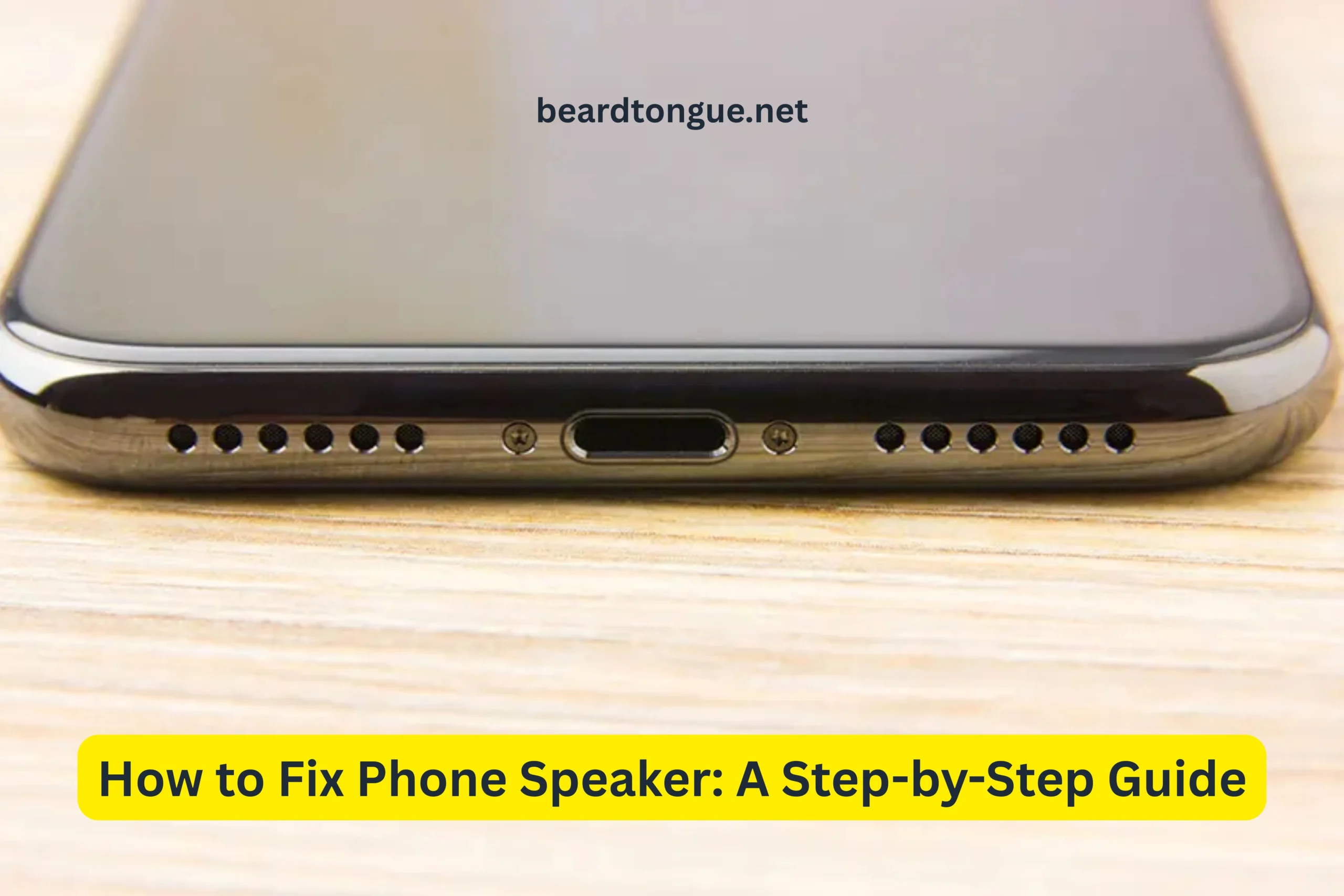
We all have been there. You are waiting for a critical phone or attempting to share a funny video with a buddy; then, your phone sounds like it is underwater. Or even worse, absolute quiet. When you need to know how to fix phone speaker issues on a gadget costing hundreds of dollars, it is extremely irritating.
Take a deep breath before you sprint to the nearest repair shop or begin searching up the trade-in value of your phone. Most problems with phone speakers are not really caused by a burned-out speaker. More often than not, the offender is something much less serious—a tenacious piece of pocket fluff, a software defect, or a stray drop of water.
Here I will take you step by step through precisely what we do at home to troubleshoot and repair phone speakers. From the most basic oops fixes to more sophisticated deep cleaning, we will travel. Your sound should be crystal clear once more.
Hardware or software issue is it?
Before we start fiddling at the hardware, we have to determine whether your phone’s brain is just bewildered. Sometimes software flaws can mislead your phone into believing it is connected to headphones even if it is not.
The Headphone Mode Malfunction
Your phone occasionally gets trapped in headphone mode. This occurs if the phone believes something is linked via Bluetooth or plugged into the jack (if you still have one!)
Switch Bluetooth off then back on. This forces the phone to cut from any hidden earphones or speakers.
How to fix phone speaker software bugs
Though it sounds cliche, shutting it off and then turning it on once more wipes the temporary memory (RAM) of the system and might cause the audio driver to snap back into place.
Safe ways to clean your phone speaker
If your music is muffled yet still functional, you most probably have debris to handle. Our pockets and handbags house our phones; in essence, these are lint, dust, and crumbs factories.
1. The Soft Brush Technique
This offers the safest beginning point. Use a fresh, dry, soft-bristled toothbrush.
-
Grasp your phone such that the speaker is faced downwards.
-
Brush the speaker grill softly in a circular direction.
-
Not pushing the dirt farther in, the aim is to release it from the phone.
2. Utilizing painter’s tape
Regular tape is too sticky and may leave residue if you can see little bits of dust caught in the grill’s perforations. Use a small length of blue painter’s tape.
-
Make a little cylinder with the sticky side out.
-
Gently press it against the speaker holes and raise.
-
You will be astounded (and possibly slightly disgusted) at what emerges.
3. Handling Compressed Air with Caution
I have seen several people damage their speakers using compressed air. Use short, little bursts and keep the nozzle at least 6 inches away if you use it. Direct, high-pressure air can rip the thin membrane within the speaker.
How to fix phone speaker water damage
Did your phone fall in the sink? Even water-resistant phones can experience muffled sound as water lodges in the mesh of the speaker.
Physics offers a smart means to solve this. Playing a particular low-frequency sound (about 165Hz) can cause vibrations strong enough to actually bounce the water droplets out of the grill.
-
Search YouTube or focused websites for Fix My Speakers or Water Eject.
-
Set the loudness to 100%.
-
See the sound waves force the dampness out.
Verifying the App Configuration
Believe it or not, occasionally the malfunctioning speaker is simply a setup you forgot about.
-
Make sure Do Not Disturb hasn’t muted your media sound.
-
Search under Accessibility settings on iPhone and Android. Pushing the balance slider all the way to the left or right may silence one of your speakers.
-
App-Specific Problems: Should the sound be functional on YouTube but not on Instagram, the issue is the app and not your phone. Try uninstalling the app or replacing it.
When to Bring in Experts
Hardware damage is possible if you’ve cleaned the grill, ejected the water, and factory reset your phone but still hear nothing or a great crackling sound.
Common indications of a blown speaker include:
-
High-volume distortion: If it sounds like paper rattling.
-
Total Quiet: even after a hard reset.
-
Persistent static: Irrespective of your choice of application.
Use your insurance (like AppleCare+ or Samsung Care+) or warranty on your phone. Opening a contemporary, sealed smartphone on your own could void your warranty and damage the seals for water resistance.
Prevention: Keeping the Sound Crisp
You will want to know how to fix phone speaker longevity by keeping it that way once your sound returns.
-
If you work in a dusty environment, such construction or a woodshop, a case covering the ports is absolutely invaluable.
-
Once a week, quickly brush your speaker grills.
-
Stay clear of bathrooms; steam from hot showers can condense inside the speaker grill, causing muffled audio over time.
Frequently Asked Questions
Q: Could I clean my speaker with a needle?
A: Not at all. The quickest method to pierce the speaker membrane is with a needle, toothpick, or any sharp metal object. Once that’s pierced, the speaker is completely destroyed. Use gentle brushes.
Q: At high volumes, why is my phone speaker crackling?
A: Usually this points to a loose component inside or damage to the speaker cone. It might also indicate that the speaker is blown from too long too loud audio listening.
Q: Would a software upgrade help my speaker?
A: Once in a while, yes. If a driver failure or audio clipping is caused by a defect, manufacturers will issue patches. Always make sure your operating system is current before considering a hardware failure.
Q: Can rubbing alcohol be used safely for cleaning the speaker?
A: On a Q-tip, you may use a very small amount of 70% isopropyl alcohol, but it must be damp, not dripping. Since liquid is electronics’ foe, be very cautious.
Your phone serves as your first link to the outside world; thus, losing sound feels like losing a limb. Following these steps—from the mildest cleaning to software checks—you can fix 90% of speaker issues at no cost. Joyful hearing!