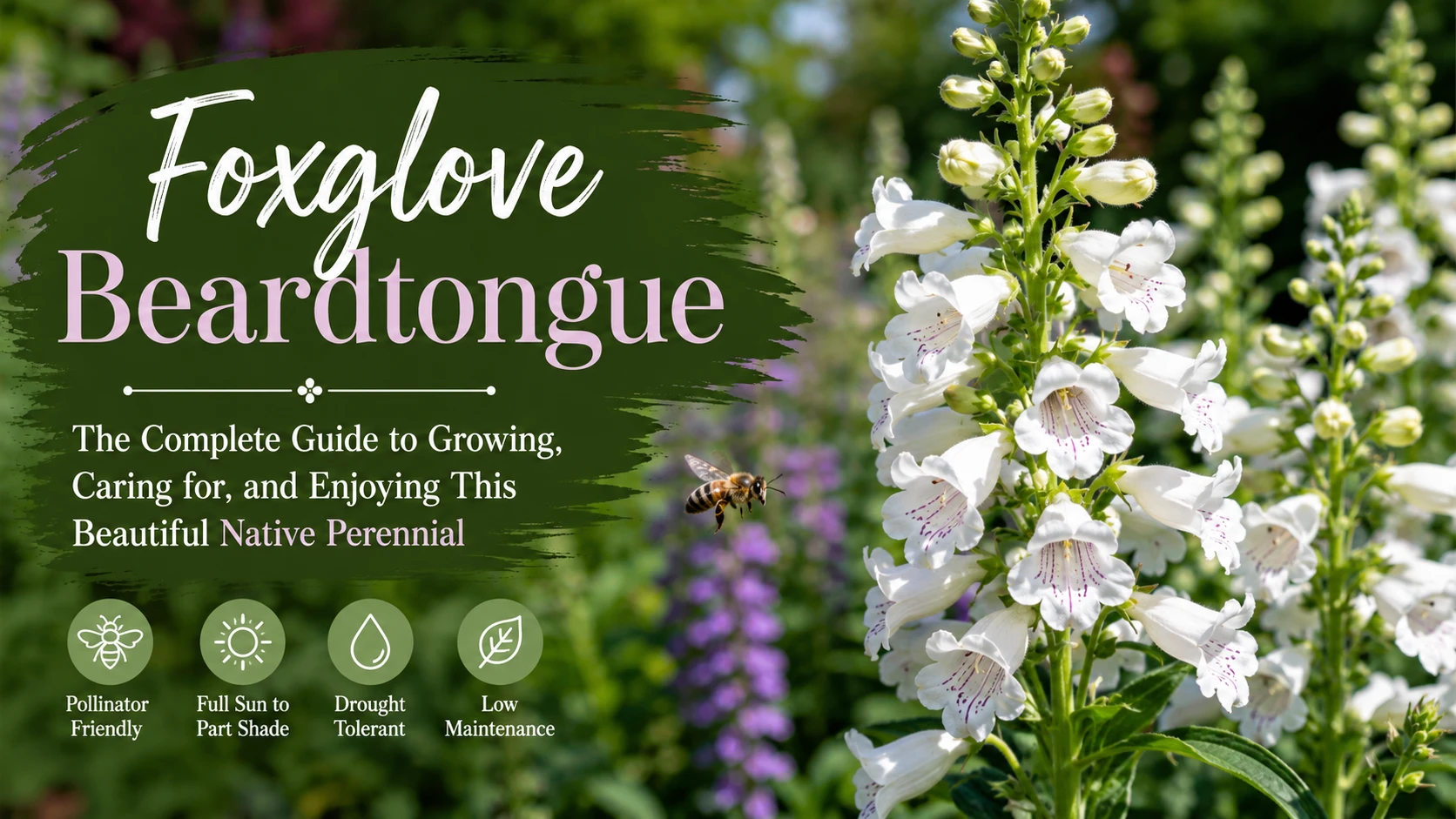
If you’re looking for a perennial that combines elegant beauty with impressive resilience, foxglove beardtongue deserves a place at the top of your list. This native North American wildflower produces graceful spikes of white blossoms, attracts bees and butterflies, and thrives with surprisingly little maintenance.
I love recommending foxglove beardtongue because it checks nearly every box gardeners care about. It’s drought-tolerant once established, supports local pollinators, adapts to different soil types, and brings months of visual interest to landscapes. Whether you’re creating a cottage garden, restoring native habitat, or simply adding long-lasting flowers to your backyard, this versatile perennial fits right in.
In this guide, you’ll learn everything you need to know about foxglove beardtongue, from planting and care to companion plants, common problems, and landscaping ideas.
What Is Foxglove Beardtongue?
Foxglove beardtongue (Penstemon digitalis) is a herbaceous perennial native to eastern North America. Despite its common name, it isn’t closely related to traditional foxgloves (Digitalis). Instead, it belongs to the Penstemon genus, which contains more than 250 species.
The plant is admired for its tall flower spikes covered with tubular white blossoms that bloom from late spring through early summer. These flowers are especially attractive to bees, hummingbirds, butterflies, and other beneficial insects.
Quick Facts
- Botanical Name: Penstemon digitalis
- Common Name: Foxglove beardtongue
- Plant Type: Herbaceous perennial
- Mature Height: 3–5 feet
- Spread: 2–3 feet
- Bloom Time: Late spring to early summer
- Flower Color: White with light purple markings
- USDA Hardiness Zones: 3–8
- Sun Requirements: Full sun to partial shade
Why Gardeners Love Foxglove Beardtongue
There are countless reasons why this native perennial continues gaining popularity.
It Supports Pollinators
One of the biggest advantages of foxglove beardtongue is its ability to attract beneficial wildlife.
You’ll often see:
- Bumblebees
- Honeybees
- Native bees
- Butterflies
- Hummingbirds
The tubular flowers provide an excellent nectar source during an important part of the growing season.
It’s Exceptionally Low Maintenance
Unlike many flowering perennials, foxglove beardtongue doesn’t demand constant attention.
Once established, it:
- Handles drought well
- Needs minimal fertilizer
- Rarely suffers from diseases
- Requires little pruning
- Returns reliably every year
That makes it an ideal choice for busy homeowners.
Beautiful Seasonal Interest
The appeal doesn’t end after flowering.
Throughout the year, the plant offers:
- Fresh green foliage in spring
- Elegant white blooms in early summer
- Attractive seed pods in late summer
- Interesting winter structure
Many birds even feed on the seeds during colder months.
Growing Conditions for Foxglove Beardtongue
Success starts with choosing the right location.
Sunlight Requirements
Foxglove beardtongue grows best in:
- Full sun (6+ hours daily)
- Partial shade in hotter climates
More sunlight generally means stronger stems and better flowering.
Soil Preferences
One reason this plant is so adaptable is its tolerance for different soil conditions.
Ideal soil includes:
- Well-drained soil
- Sandy loam
- Clay-loam mixtures
- Average garden soil
It performs surprisingly well even in less-than-perfect conditions.
Avoid locations where water sits after heavy rain.
Water Needs
During the first growing season:
- Water deeply once or twice each week.
After establishment:
- Water only during extended dry periods.
Too much moisture often causes more problems than too little.
How to Plant Foxglove Beardtongue
Planting is straightforward.
Step 1: Choose the Right Spot
Pick an area with:
- Good drainage
- Plenty of sunlight
- Room for mature growth
Step 2: Prepare the Soil
Mix in:
- Compost
- Organic matter
- Leaf mold if needed
Heavy fertilization isn’t necessary.
Step 3: Plant Properly
Dig a hole twice as wide as the root ball.
Place the crown level with the soil surface.
Backfill gently and water thoroughly.
Space plants:
- 18–24 inches apart
This promotes healthy airflow.
Caring for Foxglove Beardtongue
Good care keeps the plant thriving for years.
Fertilizing
This native perennial rarely needs fertilizer.
An excess of nitrogen results in green growth and fewer blooms.
A light layer of compost each spring is usually enough.
Mulching
Mulch the area around the plant by two to three inches.
Benefits include:
- Moisture retention
- Weed suppression
- Root protection
Keep mulch away from the crown.
Pruning and Deadheading
After flowering:
- Remove spent flower stalks if you prefer a tidy appearance.
Leave seed heads standing if you want birds to enjoy them.
Propagation Methods
You can easily multiply foxglove beardtongue.
Growing From Seed
Seeds naturally require cold stratification.
For best results:
- Sow outdoors in fall
- Or refrigerate seeds for several weeks before spring planting
Seed-grown plants often flower in their second year.
Division
Older clumps may be divided in early spring.
This helps:
- Rejuvenate mature plants
- Create new plants
- Improve airflow
Best Companion Plants
Foxglove beardtongue combines beautifully with other native perennials.
Excellent companions include:
- Purple coneflower
- Black-eyed Susan
- Blazing star
- Bee balm
- Butterfly weed
- Little bluestem grass
- Switchgrass
- Wild bergamot
These combinations create long-lasting color while supporting pollinators throughout the growing season.
Common Problems
Fortunately, major issues are uncommon.
Powdery Mildew
This fungal disease may appear during humid weather.
Prevent it by:
- Improving airflow
- Avoiding overhead watering
- Removing affected foliage
Root Rot
Poor drainage is the biggest threat.
Prevent root rot by planting in well-drained soil.
Aphids
Occasionally, aphids gather on new growth.
Natural predators like ladybugs usually keep populations under control.
Is Foxglove Beardtongue Deer Resistant?
Many gardeners report that deer rarely browse this plant.
While no plant is completely deer-proof, foxglove beardtongue is generally considered deer resistant.
It’s also relatively resistant to rabbits.
Landscaping Ideas
Foxglove beardtongue fits into nearly every garden style.
Use it in:
- Native plant gardens
- Prairie landscapes
- Cottage gardens
- Rain gardens
- Pollinator gardens
- Meadow plantings
- Mixed perennial borders
Its upright flower spikes provide excellent vertical interest among lower-growing plants.
Seasonal Care Calendar
Spring
- Clean old foliage
- Add compost
- Divide mature plants if needed
Summer
- Enjoy blooms
- Water during drought
- Watch pollinator activity
Fall
- Collect seeds
- Plant new specimens
- Leave seed heads for birds
Winter
- Minimal maintenance required
- Leave stems standing for wildlife habitat
Benefits Beyond Beauty
Growing foxglove beardtongue isn’t just about pretty flowers.
It also:
- Supports native ecosystems
- Reduces lawn space
- Requires less irrigation
- Helps conserve pollinator populations
- Improves biodiversity
- Performs well without chemicals
For environmentally conscious gardeners, it’s an outstanding investment.
Popular Cultivars
Several cultivated varieties offer unique features.
Husker Red
- Deep burgundy foliage
- White flowers
- Excellent contrast
Dark Towers
- Purple stems
- Lavender-pink blooms
- Extended ornamental value
Pocahontas
- Compact habit
- Dense flowering
- Great for smaller gardens
Each cultivar maintains the easy-care nature of the species while adding distinctive visual appeal.
Wildlife Value
Compared to many imported ornamentals, native plants offer significantly better ecological benefits.
Foxglove beardtongue serves as:
- A nectar source
- Shelter for insects
- Habitat support
- Seed source for birds
Planting even a small group can noticeably increase pollinator visits.
Tips for Success
If you want outstanding results, remember these simple guidelines.
- Plant in full sun whenever possible.
- Avoid overly rich soil.
- Don’t overwater.
- Leave room for airflow.
- Mulch lightly.
- Skip excessive fertilizer.
- Pair with other native plants.
- Let some seed heads remain for wildlife.
These practices encourage healthier plants and more abundant blooms.
Why Foxglove Beardtongue Is Worth Growing
Some perennials bloom beautifully but require constant care.
Others survive easily but offer little visual appeal.
Foxglove beardtongue strikes an impressive balance between the two. It delivers elegant flower spikes, attracts valuable pollinators, tolerates difficult growing conditions, and asks for very little in return. Whether you’re an experienced gardener or planting your very first perennial bed, this native species rewards your efforts year after year.
Instead of chasing high-maintenance plants that struggle in your climate, consider adding a few clumps of foxglove beardtongue. You’ll enjoy a healthier garden, more pollinators, and a landscape that looks naturally beautiful throughout the seasons.
Frequently Asked Questions (FAQs)
Is foxglove beardtongue the same as common foxglove?
No. Foxglove beardtongue (Penstemon digitalis) is different from common foxglove (Digitalis purpurea). Although their flowers look somewhat similar, they belong to different plant families.
Does foxglove beardtongue spread aggressively?
Not usually. It forms tidy clumps and may self-seed lightly under favorable conditions, but it is not considered invasive in most gardens.
How long does foxglove beardtongue bloom?
Most plants bloom for three to six weeks during late spring and early summer. Removing spent flowers may slightly extend the display.
Can foxglove beardtongue grow in shade?
It tolerates partial shade, especially in warmer regions, but flowering is generally best in full sun.
Is foxglove beardtongue drought tolerant?
Yes. Once established, it handles dry conditions remarkably well, making it an excellent choice for water-wise landscapes.
Do hummingbirds like foxglove beardtongue?
Absolutely. The tubular blossoms are highly attractive to hummingbirds, along with many native bee species and butterflies.
Is foxglove beardtongue suitable for containers?
Yes, especially compact cultivars. Use a large container with excellent drainage and place it where the plant receives plenty of sunlight.
Should I cut foxglove beardtongue back in the fall?
You can, but many gardeners leave the stems and seed heads standing through winter to provide food for birds and shelter for beneficial insects before cutting them back in early spring.