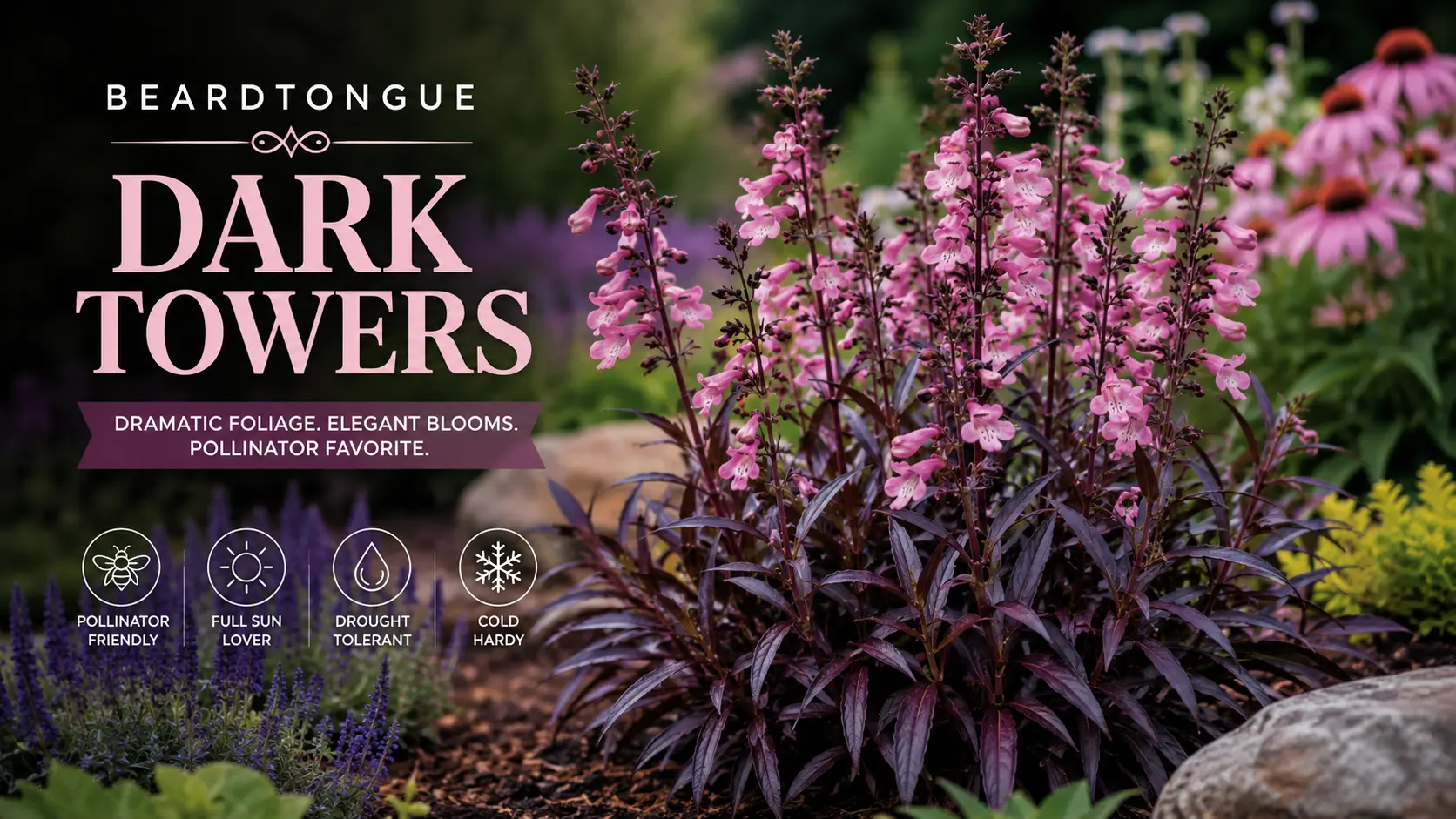
 If you’re searching for a perennial that combines striking foliage, elegant flowers, and exceptional garden performance, Beardtongue Dark Towers deserves a place at the top of your list. Gardeners are constantly looking for plants that provide beauty beyond a short blooming period, and this remarkable variety delivers exactly that.
What makes Beardtongue Dark Towers so special is its ability to offer visual interest throughout the growing season. Its dark burgundy foliage creates a dramatic backdrop that contrasts beautifully with its soft pink flowers. Whether you’re designing a cottage garden, a pollinator paradise, or a modern landscape, this versatile plant fits seamlessly into almost any setting.
In this guide, we’ll explore everything you need to know about Dark Towers Penstemon, including its characteristics, growing requirements, maintenance tips, landscape uses, and reasons why it continues to gain popularity among gardeners across the United States.
What Is Beardtongue Dark Towers?
Beardtongue Dark Towers (Penstemon ‘Dark Towers’) is a hybrid perennial belonging to the Penstemon genus, commonly known as beardtongue. It was developed to combine the best qualities of its parent plants, resulting in a hardy, long-blooming ornamental with impressive foliage and flowers.
The plant is particularly valued for:
- Deep burgundy-purple leaves
- Tall flower spikes
- Soft pink tubular blooms
- Extended flowering season
- Excellent drought tolerance
- Attraction of pollinators
Unlike many flowering perennials that rely solely on blooms for visual impact, Penstemon Dark Towers remains attractive even when not flowering thanks to its rich-colored foliage.
Key Characteristics of Dark Towers Penstemon
Appearance
One of the first things you’ll notice about Beardtongue Dark Towers is its architectural presence. The plant forms upright clumps of dark foliage that provide structure and depth in the landscape.
Foliage Features
The leaves display:
- Rich burgundy tones
- Purple-red coloration
- Glossy texture
- Long-lasting seasonal interest
The dark foliage serves as a beautiful contrast against lighter-colored flowers and neighboring plants.
Flower Characteristics
During late spring and early summer, tall stems emerge carrying clusters of tubular blossoms.
Flower traits include:
- Soft pink petals
- White interiors
- Bell-shaped flowers
- Nectar-rich blooms
The flowers appear in abundance and often continue for weeks under favorable conditions.
Mature Size
A mature Dark Towers Penstemon typically reaches:
- Height: 36–48 inches
- Spread: 18–24 inches
Its upright growth habit makes it ideal for middle or back borders in perennial gardens.
Why Gardeners Love Beardtongue Dark Towers
Many perennials offer flowers. Others offer interesting foliage. Very few provide both at such a high level.
Season-Long Interest
One major advantage is that the foliage remains attractive long after flowering has ended. This means your garden continues to benefit from the plant’s presence throughout the season.
Low Maintenance Requirements
Busy gardeners appreciate plants that don’t demand constant attention. Dark Towers is relatively easy to grow and requires minimal upkeep once established.
Pollinator Magnet
If you’re interested in supporting wildlife, this plant is an excellent choice.
It attracts:
- Hummingbirds
- Bees
- Butterflies
- Beneficial insects
The tubular flower shape is especially appealing to hummingbirds, making it a favorite in pollinator gardens.
Drought Resistance
After establishment, Beardtongue Dark Towers handles dry conditions remarkably well. This makes it valuable for water-conscious landscapes and regions that experience periodic drought.
Ideal Growing Conditions
Understanding the plant’s preferred environment is key to achieving healthy growth and abundant blooms.
Sunlight Requirements
Dark Towers performs best in:
Full Sun
- Minimum 6 hours daily
- Produces strongest stems
- Encourages maximum flowering
- Enhances foliage color
In hotter southern climates, light afternoon shade may be beneficial.
Soil Preferences
The plant thrives in:
- Well-drained soil
- Sandy loam
- Average garden soil
- Slightly acidic to neutral pH
Poor drainage is often more problematic than less-than-perfect soil fertility.
Water Needs
During the first growing season:
- Water regularly
- Keep soil moderately moist
- Avoid waterlogging
After establishment:
- Water only during extended dry periods
- Allow soil to dry slightly between watering
This drought-tolerant nature makes it a practical addition to sustainable landscapes.
How to Plant Beardtongue Dark Towers
Proper planting lays the foundation for years of healthy growth.
Step 1: Choose the Right Location
Select an area with:
- Good drainage
- Plenty of sunlight
- Adequate airflow
Avoid low spots where water tends to accumulate.
Step 2: Prepare the Soil
Before planting:
- Remove weeds
- Loosen compacted soil
- Add compost if needed
- Improve drainage if necessary
Step 3: Plant Correctly
When planting:
- Dig a hole twice as wide as the root ball
- Place the plant at the same depth it grew in the container
- Backfill gently
- Water thoroughly
Step 4: Mulch Carefully
Apply a light layer of mulch around the plant while keeping the crown exposed.
This helps:
- Retain moisture
- Suppress weeds
- Moderate soil temperature
Seasonal Care Guide
Spring Care
In spring:
- Remove winter debris
- Cut back old stems
- Apply compost
- Check for new growth
This encourages vigorous development and prepares the plant for flowering.
Summer Maintenance
Throughout summer:
- Deadhead spent blooms if desired
- Monitor moisture levels
- Enjoy abundant flowers
Deadheading may encourage additional blooming.
Fall Preparation
During autumn:
- Leave some seed heads for wildlife
- Reduce watering
- Remove damaged foliage
Many gardeners choose to leave stems standing for winter interest.
Winter Protection
In most regions:
- Minimal protection is needed
- Avoid excessive winter moisture
- Ensure proper drainage
The plant’s cold hardiness contributes to its popularity in northern gardens.
Landscape Design Ideas
One reason Dark Towers Penstemon is so widely used is its versatility.
Cottage Gardens
Its soft pink flowers blend beautifully with:
- Roses
- Coneflowers
- Salvia
- Catmint
The result is a relaxed and colorful garden aesthetic.
Pollinator Gardens
Combine it with:
- Bee balm
- Milkweed
- Black-eyed Susan
- Lavender
This creates a thriving habitat for beneficial insects and birds.
Modern Landscapes
The dark foliage pairs exceptionally well with:
- Ornamental grasses
- Silver-leaved plants
- White flowering perennials
The contrast creates a sophisticated contemporary look.
Mixed Borders
Dark Towers serves as a strong vertical accent in mixed perennial borders.
Its height and color provide balance and visual structure.
Companion Plants for Beardtongue Dark Towers
Choosing compatible plants can elevate your garden design.
Best Companions
Coneflowers
Their daisy-like blooms complement the tubular flowers beautifully.
Russian Sage
The airy texture contrasts nicely with Dark Towers’ upright habit.
Yarrow
Provides long-lasting color and drought tolerance.
Coreopsis
Adds cheerful yellow tones that pop against the dark foliage.
Ornamental Grasses
Offer movement and texture throughout the season.
Common Problems and Solutions
Fortunately, Beardtongue Dark Towers is relatively trouble-free.
Root Rot
Cause:
Poor drainage and excessive moisture.
Solution:
Improve drainage and avoid overwatering.
Floppy Growth
Cause:
Insufficient sunlight.
Solution:
Move to a sunnier location if possible.
Reduced Flowering
Cause:
Too much shade or excessive fertilizer.
Solution:
Increase sun exposure and use fertilizer sparingly.
Winter Losses
Cause:
Wet winter soils.
Solution:
Ensure excellent drainage year-round.
Benefits Beyond Beauty
Dark Towers offers more than visual appeal.
Supports Biodiversity
By attracting pollinators, the plant contributes to healthier ecosystems.
Water-Wise Gardening
Its drought tolerance helps reduce water consumption once established.
Long-Term Value
As a perennial, it returns year after year, providing excellent value compared to annual flowers.
Deer Resistance
While no plant is completely deer-proof, Penstemon varieties are generally less attractive to deer than many other ornamentals.
Beardtongue Dark Towers vs Other Penstemon Varieties
Gardeners often compare Dark Towers with other beardtongue cultivars.
Dark Towers
Strengths include:
- Burgundy foliage
- Pink flowers
- Strong garden presence
- Long seasonal interest
Husker Red
Known for:
- White flowers
- Reddish foliage
- Compact growth
Red Rocks
Features:
- Lavender-pink flowers
- Green foliage
- Extended bloom period
Among these options, Dark Towers often stands out because of its unique combination of dramatic foliage and colorful blooms.
Is Beardtongue Dark Towers Right for Your Garden?
This perennial may be ideal if you want:
- Low-maintenance plants
- Pollinator-friendly landscaping
- Drought-tolerant garden solutions
- Four-season visual appeal
- Unique foliage color
Whether you’re a beginner or an experienced gardener, Dark Towers offers reliable performance and impressive ornamental value.
Its ability to combine beauty, resilience, and ecological benefits makes it one of the most rewarding perennials available today.
Frequently Asked Questions (FAQ)
What is Beardtongue Dark Towers?
Beardtongue Dark Towers is a hybrid Penstemon perennial known for its dark burgundy foliage and tall spikes of soft pink tubular flowers.
How tall does Dark Towers Penstemon grow?
It typically reaches between 36 and 48 inches in height with a spread of approximately 18 to 24 inches.
Does Beardtongue Dark Towers attract pollinators?
Yes. It attracts hummingbirds, butterflies, bees, and various beneficial insects.
Is Dark Towers Penstemon drought tolerant?
Absolutely. Once established, it performs well under dry conditions and requires relatively little supplemental watering.
Does it need full sun?
For the best foliage color and flowering performance, full sun is recommended. Light afternoon shade may be beneficial in very hot climates.
Is Beardtongue Dark Towers deer resistant?
While no plant is completely deer-proof, Dark Towers is generally considered deer resistant.
When does Dark Towers bloom?
The plant usually blooms from late spring into early summer, with flowering often lasting several weeks.
Can it grow in containers?
Yes. Large containers with excellent drainage can successfully support Beardtongue Dark Towers, provided the plant receives sufficient sunlight.
How often should it be watered?
Water regularly during the first growing season. After establishment, watering is only needed during prolonged dry periods.
Why is Dark Towers so popular?
Its combination of striking dark foliage, attractive pink flowers, pollinator appeal, drought tolerance, and low-maintenance nature makes it a favorite among gardeners and landscape designers alike.