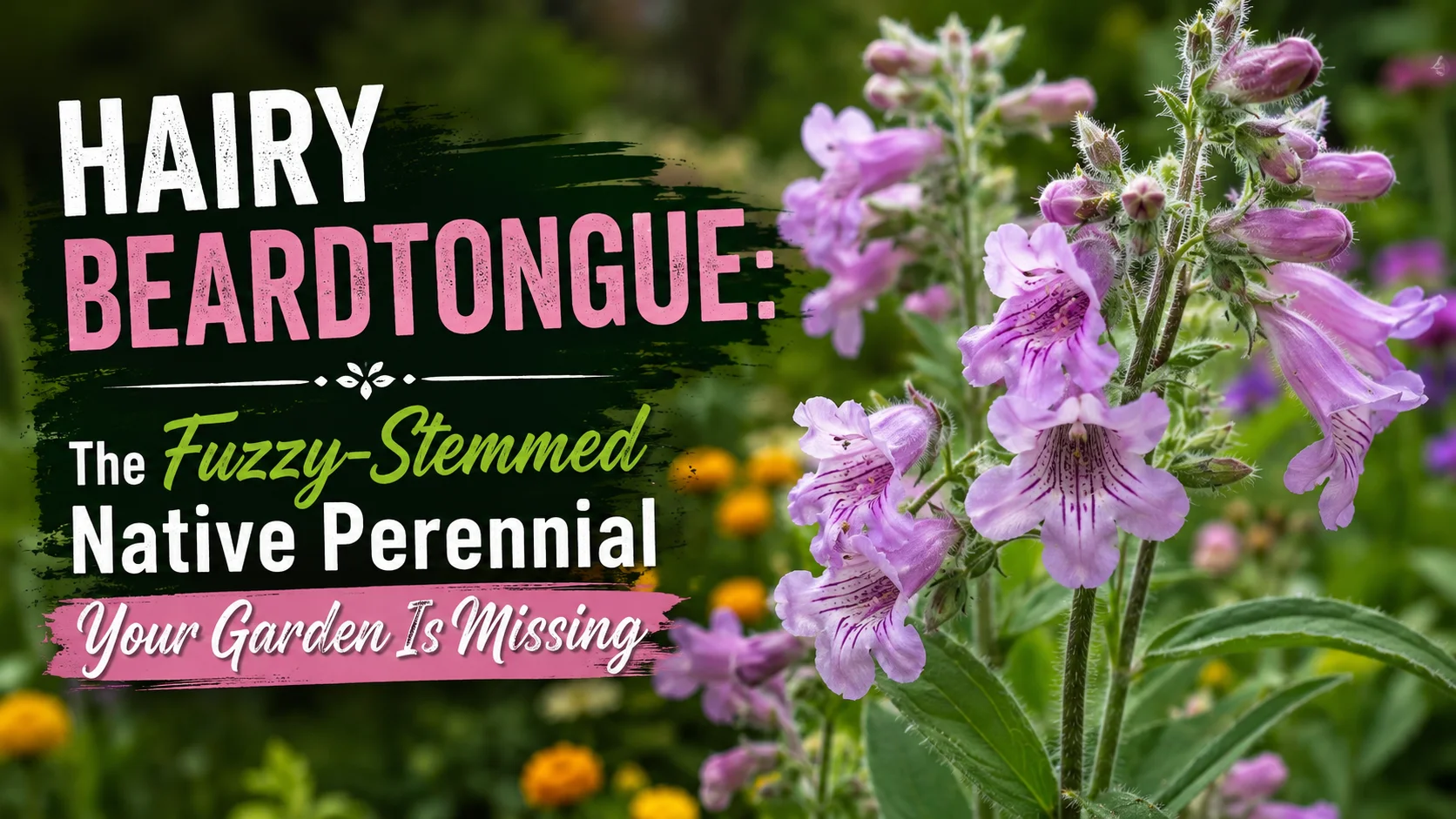
Picture this: it’s early June, the tulips are long gone, and most of your perennial bed is still just green leaves waiting for their turn to shine. Then, out of nowhere, a cluster of pale lavender, tube-shaped blooms opens up and the bees show up in droves — not a few polite visitors, but a full-on buzzing party. That’s what happens when you grow hairy beardtongue.
I’ll be honest with you — this plant doesn’t get nearly the attention it deserves. Gardeners rave about coneflowers and black-eyed Susans, but hairy beardtongue (botanically known as Penstemon hirsutus) quietly does something those summer favorites can’t: it blooms early, asks for almost nothing, and still manages to look elegant doing it. If you’ve never grown a beardtongue before, this guide will walk you through everything — what it is, how to plant it, and how to keep it thriving for years.
What Exactly Is Hairy Beardtongue?
Hairy beardtongue is a herbaceous perennial native to a wide swath of eastern and central North America, from Ontario and Quebec down through the Appalachians and west into the prairies of Kansas and Manitoba. You might also hear it called hairy penstemon or northeastern beardtongue, depending on where you live.
The name isn’t just for show. Run your fingers along the stem and you’ll immediately understand — it’s covered in a soft, fine fuzz that gives the whole plant a slightly woolly texture. That same fuzziness shows up on the lower lip of each flower, which is where “beardtongue” comes from. Botanically speaking, the name refers to the plant’s sterile stamen, which looks like a tiny bearded tongue poking out of the blossom.
A few defining traits to look for:
- Height: Typically 1 to 3 feet tall, with some plants stretching closer to 32 inches in ideal conditions
- Stems: Erect, reddish-brown, and covered in tiny white hairs, usually growing in clusters from the same rhizome
- Leaves: Lance-shaped, deep green, opposite along the stem, with slightly toothed edges — and they turn a lovely burgundy-red in autumn
- Flowers: Trumpet-shaped, pale lavender to violet, with a whitish, hairy lower lip, blooming in open clusters above the foliage
- Bloom time: Late spring into early summer, usually May through June or July, depending on your zone
What really sets it apart from its Penstemon cousins is timing. Hairy beardtongue tends to be one of the very first native penstemons to flower, filling that awkward gap after spring bulbs fade but before the bulk of your perennials wake up.
Why This Plant Deserves a Spot in Your Garden
I’ve grown a lot of native perennials over the years, and what keeps pulling me back to hairy beardtongue is how little it asks for in return for what it gives. Here’s why it’s worth the space:
It’s a Pollinator Powerhouse
Bumblebees seem to have a particular obsession with this plant, and it’s easy to see why. The tubular flower shape is practically built for bees to climb into, and the nectar reward is generous enough to attract queens just emerging from hibernation in spring. Hummingbirds and butterflies stop by too, and the plant even serves as a larval host for several checkerspot butterfly species, including the increasingly rare Baltimore checkerspot.
It Shrugs Off Drought
Once established, hairy beardtongue barely notices a dry spell. Its root system is built for lean, rocky, or sandy soils — the kind of ground where a lot of showier perennials would sulk and wilt. If you’ve got a hot, dry corner of the yard that nothing seems to want to grow in, this could be your answer.
Deer and Rabbits Leave It Alone
The slightly fuzzy, textured foliage isn’t especially appetizing to browsing wildlife, which makes hairy beardtongue a smart pick if deer regularly raid your garden.
It Doesn’t Take Over
Unlike aggressive spreaders such as goldenrod or obedient plant, hairy beardtongue is a well-mannered clump-former. It spreads slowly through short rhizomes and modest self-seeding, so you’ll get gradual, manageable growth rather than a takeover.
How to Grow Hairy Beardtongue: A Step-by-Step Guide
Choosing the Right Spot
Give this plant full sun if you can — at least six hours of direct light daily. It will tolerate partial shade, but don’t expect the same flower show; too much shade and blooming can drop off dramatically. Well-drained soil is non-negotiable. Rocky, sandy, or lean soils actually work in this plant’s favor, while heavy, waterlogged clay is where you’ll run into trouble.
Planting Tips
- Space plants roughly 12 to 18 inches apart to allow for their natural clumping habit
- Fall planting tends to give roots a head start, letting them establish through the cooler months before the growing season kicks in
- If starting from seed, sow indoors 6 to 8 weeks before your last frost date, or direct-sow in fall so the seeds get the cold stratification they need
- Avoid planting too deep — like most penstemons, hairy beardtongue prefers to sit at or slightly above soil grade to prevent crown rot
Watering
Keep the soil consistently moist while the plant is getting established during its first season. After that, you can ease off considerably. Let the top inch or two of soil dry out between waterings, and resist the urge to baby it — overwatering is far more likely to kill this plant than underwatering ever will.
Feeding and Mulching
Hairy beardtongue isn’t a heavy feeder. A light application of organic or balanced fertilizer in early spring is plenty; skip the rich, nitrogen-heavy stuff, which tends to produce floppy growth at the expense of flowers. A thin layer of mulch — bark, compost, or pine straw — helps retain moisture and keep weeds down, but keep it pulled a few inches back from the crown so the stems don’t stay damp and invite rot.
Pruning and Deadheading
Deadhead spent blooms regularly and you’ll often coax out a second, lighter flush of flowers later in the season. Once temperatures drop in late fall, or alternatively in early spring, cut the foliage back to about 4 to 6 inches to make room for fresh growth. If you want to support local wildlife, leave some seed heads standing through winter — goldfinches in particular appreciate the free meal.
Common Problems and How to Handle Them
The good news is that hairy beardtongue isn’t prone to serious pest or disease trouble. Still, a few issues can crop up:
- Root rot — almost always caused by soil that stays too wet. The fix is prevention: plant in well-drained soil from the start and avoid overhead watering
- Powdery mildew and leaf spot — more common in humid climates or crowded plantings. Good air circulation between plants goes a long way toward avoiding this
- Rust — shows up as small, rust-colored spots on leaves and stems, occasionally leading to stunted growth. Removing and discarding affected foliage helps limit its spread
- Slugs, snails, and nematodes — occasional visitors, but rarely a serious threat to an established plant
Best Companion Plants for Hairy Beardtongue
Because it blooms so early, hairy beardtongue pairs beautifully with plants that pick up the color once its flowers fade. Some combinations I’d recommend:
- Wild geranium and columbine — both bloom around the same window and share similar light and soil preferences
- Golden Alexander — its bright yellow umbels create a striking contrast against the lavender blooms
- Prairie dropseed or little bluestem — ornamental grasses that fill in around the base and add structure once the beardtongue’s bloom period ends
- Butterfly weed and aromatic aster — extend the pollinator buffet through summer and into fall, once hairy beardtongue has finished its show
This kind of layered planting mimics how the species grows in the wild — scattered among prairies, open woodlands, and meadow edges alongside a rotating cast of other natives.
Is Hairy Beardtongue Right for Your Garden?
If you’re drawn to low-fuss, high-reward native plants, this one checks nearly every box. It’s not fussy about soil as long as drainage is decent, it laughs off dry spells, and it rewards you with an early burst of color exactly when your garden needs it most. The only gardeners who might want to look elsewhere are those working with heavy, constantly damp clay soil or deep shade — in those conditions, this plant will struggle no matter how much care you give it.
For everyone else, especially if you’re trying to build a pollinator-friendly, water-wise landscape, hairy beardtongue earns its keep season after season.
Frequently Asked Questions
How tall does hairy beardtongue grow? Most plants reach somewhere between 1 and 3 feet, with the average garden specimen landing around 18 to 24 inches at full bloom.
Is hairy beardtongue the same as foxglove beardtongue? No. They’re related but distinct species. Hairy beardtongue (Penstemon hirsutus) has fuzzy, textured stems and pale lavender flowers that bloom earlier in the season, while foxglove beardtongue (Penstemon digitalis) has smooth, glossy stems, pure white flowers, and blooms a few weeks later.
Does hairy beardtongue spread aggressively? Not really. It spreads gradually through short rhizomes and modest self-seeding, forming a slowly expanding clump rather than taking over the surrounding bed.
Can I grow hairy beardtongue in a container? Yes, as long as the pot is at least 16 inches wide, filled with a gritty, well-draining mix, and placed somewhere it gets full sun. Just be careful not to overwater.
Is hairy beardtongue toxic to pets? There’s no strong evidence linking this plant to toxicity in dogs or cats, and it doesn’t appear on major toxic plant lists. That said, it’s always wise to discourage pets from chewing on any garden plant.
When is the best time to plant hairy beardtongue? Fall planting is generally preferred, since it gives the root system time to establish over the cooler months before flowering begins the following spring. Spring planting works too, just be diligent about watering through the first summer.
Do I need to divide hairy beardtongue? Eventually, yes. Every 3 to 5 years, or whenever the center of the clump starts looking sparse or woody, dividing the plant will help rejuvenate growth and give you extra plants to spread around the garden.